Many people follow consistent routines, invest in recommended products, and still feel that their skin never fully settles. One concern fades while another appears. Breakouts last despite targeted treatments and sensitivity becomes more noticeable. It is also common to see skin that feels oily on the surface, but tight and dehydrated underneath.
The instinct in these situations is often to search for a better product or a stronger formula. The focus shifts from one solution to another, while the overall condition of the skin remains unstable. What is often overlooked is that these patterns are not random: they can point to a deeper imbalance that affects how the skin functions day to day. Before addressing specific concerns, it is important to understand what your skin barrier actually is and why it plays such a central role in how your skin behaves.
The system your skin depends on
It helps to look closely at the outermost layer, known as the stratum corneum, to understand why skin can become reactive or inconsistent. This is what we refer to as the skin barrier, although the word “barrier” can be misleading if it suggests something static or passive.
In reality, this layer functions as a living, structured system. It is made up of skin cells held together by lipids, forming an organized surface that regulates how the skin interacts with its environment. Its role is not limited to blocking external factors, it continuously manages exchange, allowing the skin to retain hydration while controlling what comes into contact with deeper layers. One of its key responsibilities is to prevent excessive water loss. Even healthy skin naturally loses a small amount of moisture throughout the day, but when the barrier is functioning well, this process remains controlled. At the same time, the barrier reduces the penetration of irritants, pollutants, and microorganisms that can trigger inflammation or discomfort. It is helpful to think of this layer as a calibrated interface rather than a shield. It maintains stability by keeping essential elements within the skin, while moderating external influence. This balance allows the skin to remain stable, even when conditions change.
Because of this role, the condition of the barrier directly affects how the skin behaves. When it is intact, the skin tends to feel comfortable and less reactive. When its structure becomes disrupted, the balance it maintains begins to shift, and this is often where visible concerns start to develop.
When the balance begins to shift
When the skin barrier is disrupted, the changes are not always immediately obvious. The structure becomes less effective at retaining moisture, which leads to increased transepidermal water loss. In simple terms, the skin begins to lose water faster than it can hold it and, at the same time, its surface becomes more permeable, so external factors can affect it more easily. This shift in balance usually appears through small, but persistent signals. The skin may feel tight after cleansing, develop uneven texture, or react more quickly than before. These signs are often treated separately, although they tend to come from the same underlying change in skin function. As this imbalance develops, it can take different forms:
Acne
A weakened barrier can intensify inflammation while pushing the skin to produce more oil in response to dehydration. This combination often results in breakouts that continue and feel difficult to regulate. Active treatments can further disrupt the skin if they are introduced too aggressively.
Sensitivity
When the barrier becomes less selective, irritants pass through more easily. The skin starts reacting to products or environmental factors that were previously well tolerated. What is often perceived as a skin type can in many cases reflect a temporary compromised state.
Dehydration
Moisture escapes more quickly from the skin, which makes hydration difficult to maintain. Even well-formulated products may give only a short-term effect, because the skin is not able to retain what it receives.
Premature aging
Ongoing imbalance affects how the skin recovers and maintains its structure. Low-level inflammation and constant moisture loss gradually influence elasticity and tone, which can lead to a tired or uneven appearance over time. These conditions are often approached as separate concerns, each with its own solution. However, they are frequently connected by a single factor, which is the condition of the skin barrier itself.
When solutions start to create new problems
When different skin concerns begin to appear at once, the natural response is to address each of them directly. Breakouts call for targeted treatments, sensitivity leads to soothing products, dehydration brings in layers of hydration. This approach feels logical, but it often overlooks the condition that connects these concerns in the first place. As a result, the focus shifts toward managing visible symptoms while the underlying imbalance remains unchanged.
Several patterns tend to reinforce this cycle. Strong active ingredients are often introduced in an attempt to speed up progress, although skin that is already compromised may not tolerate them well. Frequent or intensive cleansing can further weaken the surface, especially when the skin is already struggling to retain moisture. Constantly changing products in search of a better match can also prevent the skin from stabilizing, as it has little time to adapt and recover.
In the short term, some of these steps can create visible improvement. The skin may appear smoother or more even for a period of time, but this effect is often temporary. As the barrier remains compromised, the same concerns tend to return, sometimes in a more reactive form.
Starting from stability
If many skin concerns share the same underlying cause, the way they are approached needs to shift as well. Instead of addressing each symptom separately, the focus moves toward restoring the conditions in which the skin can function normally again. This approach begins with the idea that correction works best when the skin is stable. When the barrier is supported, the skin responds more predictably, and treatments become more effective eventually. This way of working with the skin in practice tends to follow a few consistent principles:
Reducing unnecessary stress
The first step is often to remove what continuously disrupts the skin. This can include overly frequent exfoliation, strong actives used without support, or routines that change too often. Giving the skin a more consistent environment allows it to begin restoring its natural balance.
Supporting the skin’s structure
As the barrier recovers, the focus shifts toward reinforcing its integrity. This involves replenishing lipids, which help maintain cohesion within the outer layer and support the skin’s ability to retain moisture. The goal is to help the skin rebuild its own stability.
Respecting the skin’s ecosystem
The surface of the skin functions as an environment where beneficial microorganisms play a role in maintaining balance. Sensitivity and reactivity tend to increase when this ecosystem is disrupted. A barrier-focused approach takes this into account and avoids practices that interfere with this natural balance.
Keeping routines intentional and consistent
A simpler routine often allows the skin to respond more clearly. Instead of introducing multiple new products at once, changes are made gradually with attention to how the skin adapts. This reduces the likelihood of irritation and helps build long-term resilience.
Introducing actives with care
Targeted ingredients still have a place, but their timing and context matter. When the skin is more stable, it is better able to tolerate and benefit from them. This leads to results that are more consistent, rather than short-lived.
The Natural Way on calming the skin
At The Natural Way Spa, skin is approached with the understanding that it already has the mechanisms it needs to function well. Inconsistency and reactivity develop when those mechanisms are disrupted by routines that are too aggressive or not aligned with the current state of the skin. For this reason, the focus is not placed on chasing individual concerns in isolation. Instead, attention is directed toward restoring the conditions that allow the skin to regulate itself with more stability. When this foundation is in place, concerns such as sensitivity, dehydration tend to become easier to manage and less persistent over time.
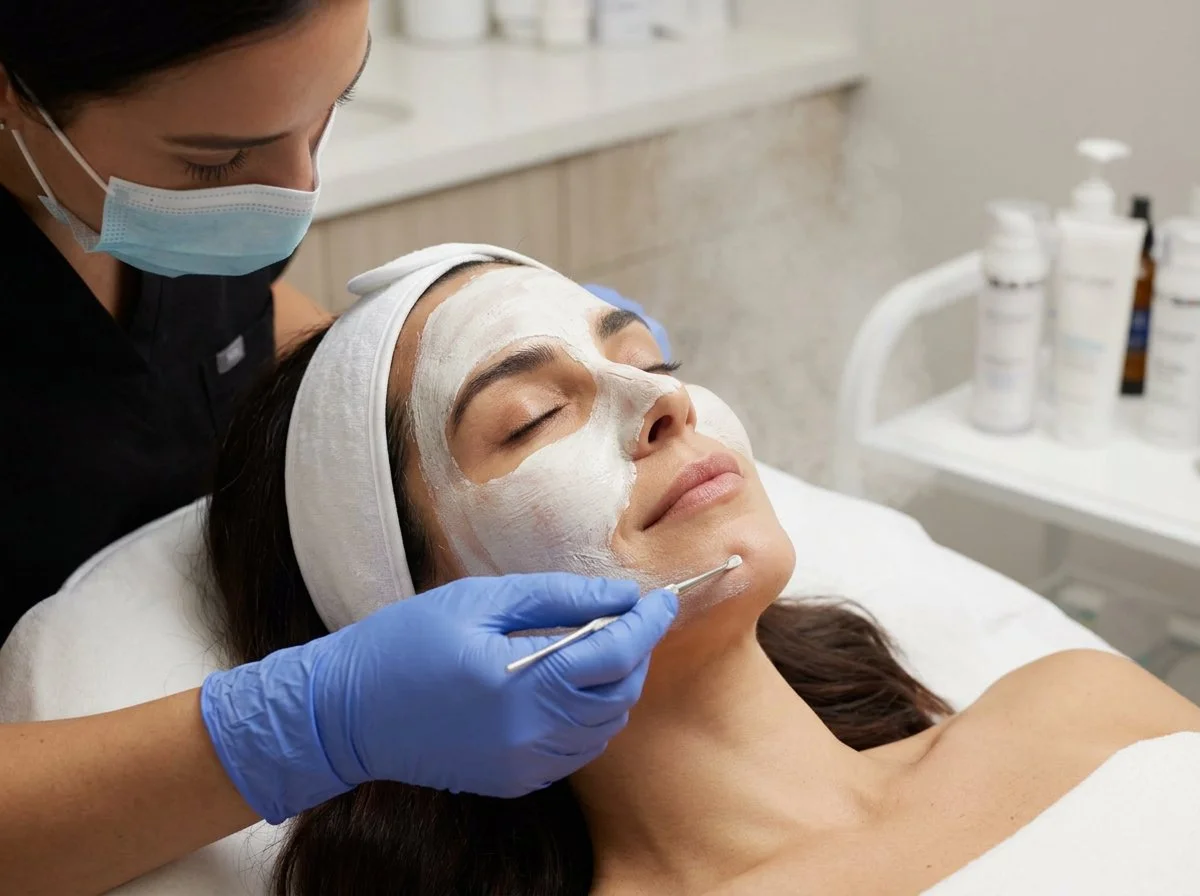
This way of working requires a certain restraint: it involves limiting unnecessary steps, avoiding the urge to accelerate results, and paying close attention to how the skin responds at each stage. In practice, this philosophy shapes both treatments and consultations. Each facial is adapted to the current condition of the skin with priority given to calming and supporting barrier function when needed. As the skin becomes more balanced, additional techniques and products can be introduced with greater precision, based on how it responds rather than on a fixed routine. Consultations follow the same logic. The process often begins with simplifying what is already in place and identifying factors that may be interfering with the skin’s ability to stabilize. This creates a clearer path toward long-term improvement, without the cycle of temporary results followed by renewed sensitivity.
With time this approach allows the skin to become less reactive and more consistent in how it behaves. It holds hydration more effectively, responds to treatments with greater predictability, and requires fewer corrective steps. When the barrier is supported, the skin doesn’t need to fight.
If your skin feels like it is constantly shifting between concerns, a professional consultation can help bring clarity and direction with a focus on restoring balance before adding complexity.